

Meeting the challenges of medical device miniaturisation with photochemical etching

As electronics continue to shrink and medical devices become smaller, smarter and more feature-dense, progress is increasingly measured in fractions of a millimetre. From hearing aids and cochlear implants to drug delivery systems and surgical instruments, manufacturers are integrating more functionality into ever more compact products.
While this benefits patients through less invasive treatments and more discreet devices, it also creates challenges for manufacturers. Producing tiny metal components with complex geometries and tight tolerances is no mean feat.
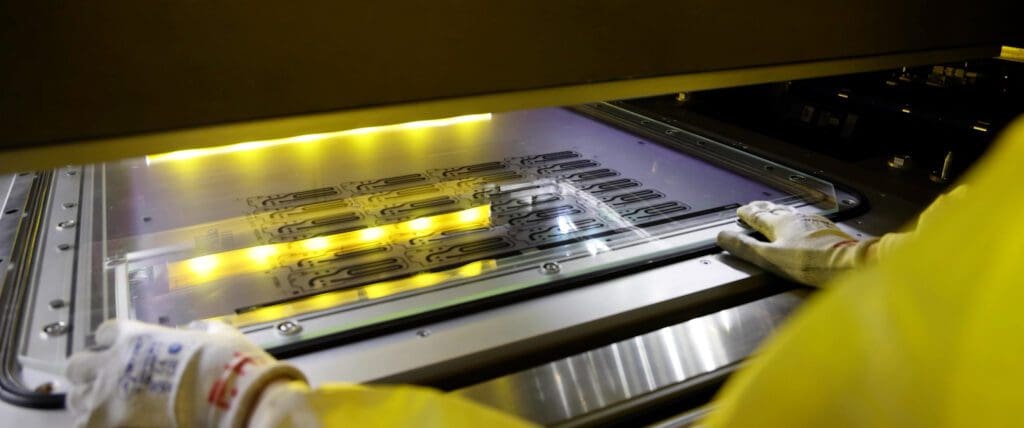
One manufacturing process helping to meet these demands is photochemical etching. Rather than removing material mechanically, photochemical etching uses a photographic stencil to define a component’s geometry before the exposed areas of metal are chemically removed.
Because there is no physical contact with the material, the process is cleaner and does not introduce stresses, burrs or heat-affected zones that can compromise component performance or require secondary finishing.
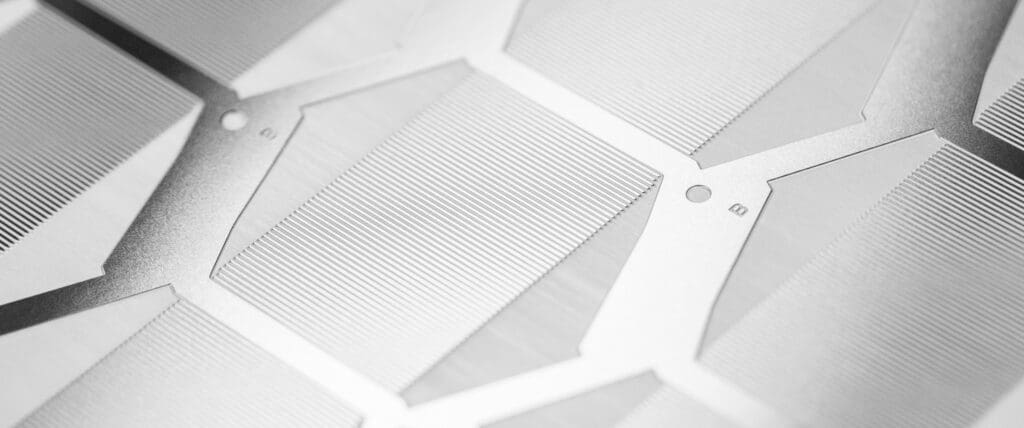
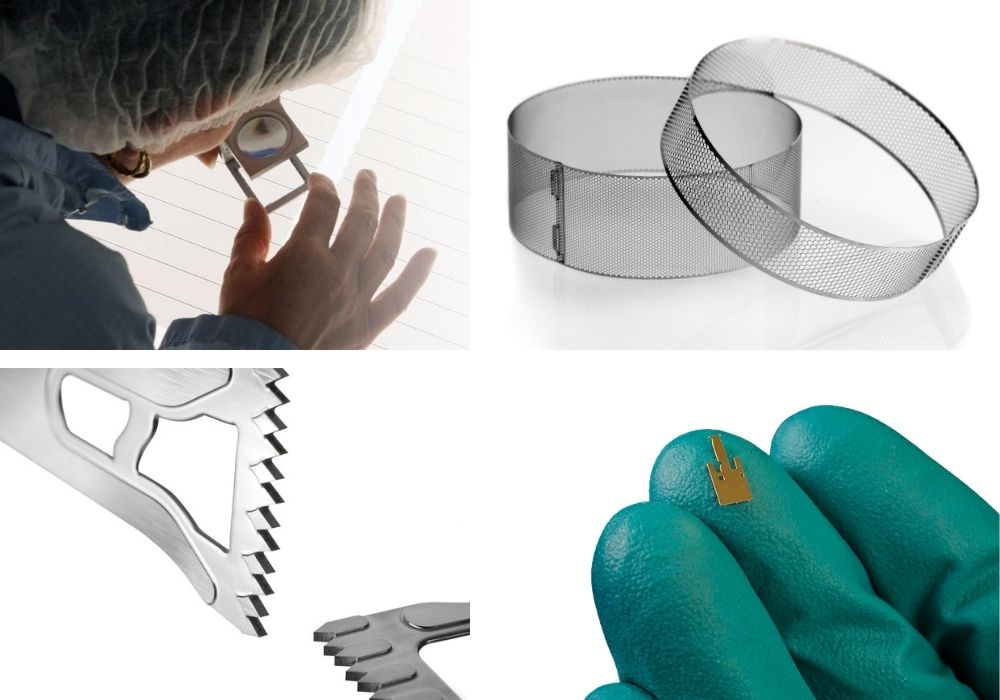
This makes it well suited to medical electronics, where components are often measured in fractions of a millimetre. For example, conductive springs used inside cochlear implants must deliver reliable electrical performance while fitting into increasingly compact housing.
Similarly, the intricate battery contacts used in implantable medical devices demand exceptional precision and repeatability, with even small dimensional variations potentially affecting assembly and long-term reliability.
Miniaturisation is also influencing other areas of medical technology. Just look at nebulisers, which rely on precision-engineered metal components to help regulate airflow and medication delivery. Plus, many surgical and diagnostic devices incorporate intricate metallic features that would be difficult or expensive to manufacture using more traditional techniques.
In addition, photochemical etching is used to produce stainless steel medical blades. These often feature fine teeth, intricate cutting profiles or other detailed surface features that can be difficult to achieve using traditional metal cutting.
Since the process shapes the material without mechanical force, manufacturers can create these complex profiles while preserving the metal’s properties before any final sharpening or finishing takes place.
The way medical devices are manufactured differs from many other industries too. Production volumes are often lower than in sectors such as automotive or consumer electronics, particularly during product development, clinical trials or for specialist devices. Simultaneously, designs frequently evolve as products move through testing and regulatory approval.
This is where manufacturing flexibility becomes important. Because photochemical etching uses photographic tooling rather than hard tooling, design changes can be introduced quickly without the expense of producing new dies. That makes it well suited to prototype development, design iterations and lower-volume production, while remaining scalable if demand increases.
The process is also compatible with a wide range of engineering metals, including stainless steels, nickel alloys and copper-based materials. This allows manufacturers to select materials based on the performance required for the application, whether that is corrosion resistance, conductivity or mechanical strength, without being limited by the manufacturing process itself.
Precision Micro’s low setup and tooling costs mean that photochemical etching can support economical production from prototypes through to larger batch sizes. As devices continue to shrink and increase in complexity, the combination of precision and flexibility is what enables the next generation of medical technologies.
Chemical Etching Whitepaper
Learn how chemical etching can overcome the limitations of traditional sheet metal machining technologies.
DownloadLatest Articles