

Bridging the gap between prototyping and production

- How chemical etching can reduce tooling costs and support product development from initial prototypes to high-volume manufacturing
- Why chemical etching helps engineers test different designs, materials and geometries before committing to production
- How Precision Micro supports pre-series manufacturing with a process that can scale from small development batches to high-volume production
According to Protolabs’ Innovation in Manufacturing 2026 report, 97 per cent of companies report delays or failures when bringing products to market, with scaling to production identified as the biggest challenge for product developers. Here, Ben Kitson, head of business development at chemical etching specialist, Precision Micro, explains how finding the right manufacturing process early on can help reduce the risks associated with moving from initial prototypes to full-scale production, as manufacturers look to invest in new products.
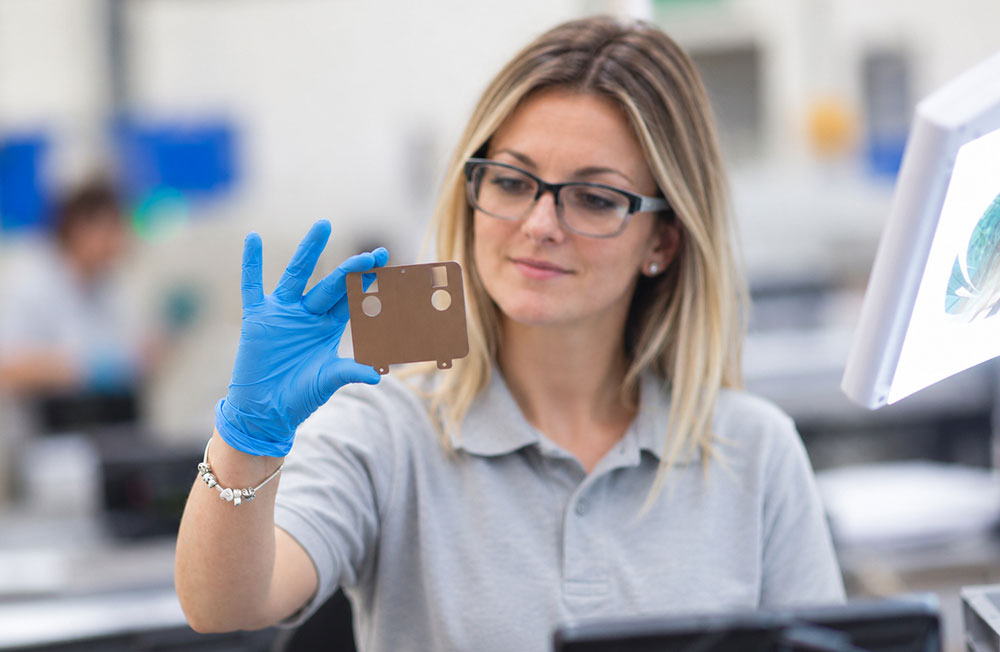
How chemical etching supports product development and pre-series manufacturing
Electronics and semiconductor products often have short development cycles, making speed to market crucial. Yet moving from a working prototype to volume manufacturing can introduce significant costs, particularly when tooling and validation requirements change.
If using stamping and pressing, manufacturers may initially use soft tooling to prototype and test a design. These tools are made from steel that is easier and cheaper to machine, and typically last between 10 and 10,000 cycles, compared with around one million cycles for hardened production tooling. Soft tools may also be smaller and contain fewer components, keeping initial costs down.
Once a design is validated, however, manufacturers need to invest in hardened tooling for larger production runs. This means validating the component again using the new tooling and process, adding time and expense. With production tooling potentially costing five or six figures, this can create a costly hurdle on the way to volume manufacturing.
Manufacturers ready to invest
This challenge is more relevant than ever as manufacturers look to invest in product development. Despite ongoing cost pressures, investment in innovation remains a priority. A 2026 Make UK and PwC Executive Survey found that 68% of UK manufacturers are increasing investment in new product development. Supporting this wider trend, the European Investment Bank’s 2026 Investment Survey found that 85% of EU businesses had invested during the past year.
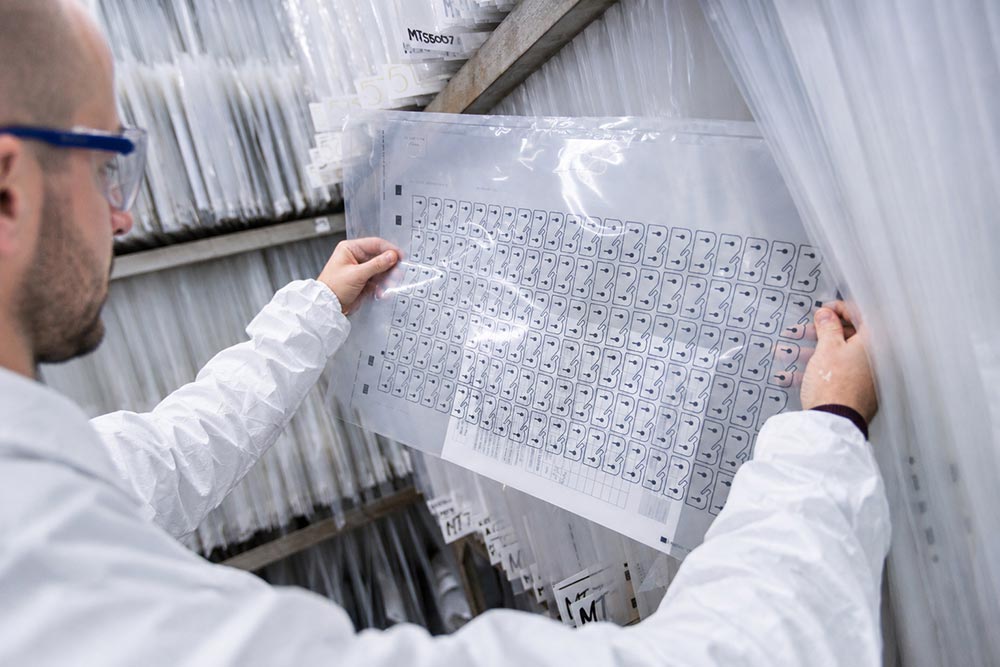
Here, chemical etching offers a viable route for products or components that require precision manufacturing. Development tooling typically costs around the equivalent of US$130, making it an accessible option for projects ranging from 100 prototype samples to production runs of 100,000 components.
This allows manufacturers to scale production without automatically requiring new tooling, although appropriate testing and validation are still needed to confirm that components meet the required specifications.
Low tooling costs also make design experimentation more cost-effective. For example, a filtration mesh can incorporate six different variations of hole size and spacing on a single sheet using one tool, where the design allows, with samples delivered in seven days.
Getting materials and designs right
These trials also help engineers assess material choice, thickness and geometry. For chemical etching, it’s typically used for metal thicknesses of up to around 1.5 mm, although materials up to 2.5 mm thick can be processed.
Within this range, etching can make it easier to trial different material gauges without the equivalent tooling changes that stamping may require. In stamping, changing material thickness can affect tooling clearances and radii, potentially requiring modifications costing thousands of pounds and taking weeks.
The process can also handle both soft and hard metals, including specialist stainless steels used for springs. Because chemical etching removes material without applying the same mechanical forces as stamping or introducing the heat-affected zones associated with laser cutting, it preserves material properties and avoids stamping-related burrs. Cleaning is also incorporated into the process.
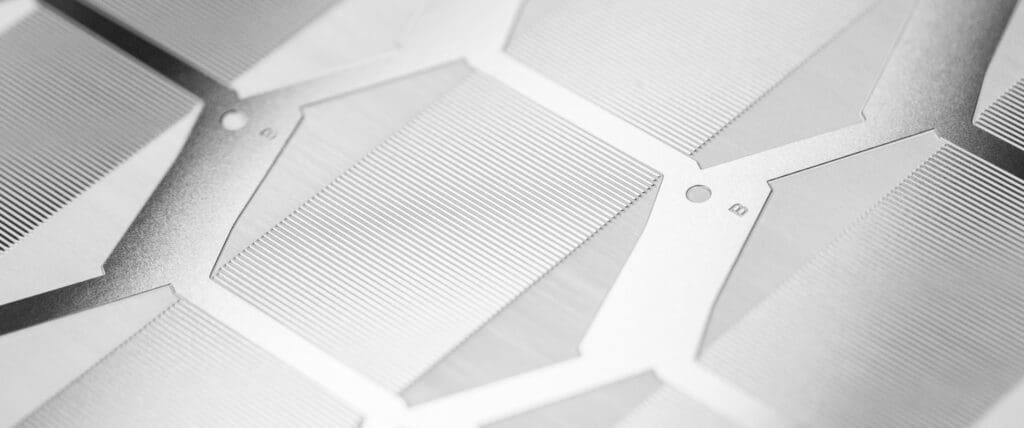
Design complexity is another consideration. Etching can produce numerous holes and intricate channels simultaneously, making it suitable for applications ranging from flow channels in semiconductor cooling plates to automotive speaker grilles.
The technology also has a role to play in automotive “under the hood”, where Precision Micro developed etched springs that became a standard component in fuel pumps, ABS braking systems and catalytic convertors.
In gasoline direct injection (GDI) systems, etched components are also used in high-volume, safety-critical applications where manufacturing consistency is essential and 100 per cent inspection is carried out across more than 1,000,000 components per month.
Planning for production
Choosing a manufacturing process is not just about making the first prototype. Considering production volumes, material requirements and performance specifications early can help avoid expensive changes later.
Working with a supplier equipped to support both development and high-volume manufacturing also helps maintain continuity as requirements evolve.
With tooling costs around US$130 and a process that can scale from prototypes to production, chemical etching gives manufacturers more scope to refine designs before committing to volume manufacture.
Developing a component for pre-series or high-volume production? Contact us to discuss your application and material requirements at www.precisionmicro.com.
FAQs
- What is pre-series manufacturing? Pre-series manufacturing is the stage between product development and full-scale production. It involves producing components in limited quantities to assess design readiness, manufacturing consistency and performance. This allows manufacturers to identify potential issues and refine specifications before committing to larger production volumes.
- How does chemical etching compare with stamping for prototyping? Chemical etching uses low-cost tooling, making it suitable for testing design variations without the substantial upfront investment associated with stamping tools. It can also produce intricate geometries without stamping-related burrs. The most appropriate process depends on the component’s material, thickness, geometry, tolerances and intended production volume.
- Can chemical etching be used for high-volume manufacturing? Yes. Chemical etching can support both prototype development and high-volume production using the same tooling and process. Provided the component continues to meet its required specifications, increasing production volumes does not automatically require revalidation due to a tooling change. Suitability depends on the component design and application requirements.
Chemical Etching Whitepaper
Learn how chemical etching can overcome the limitations of traditional sheet metal machining technologies.
DownloadLatest Articles